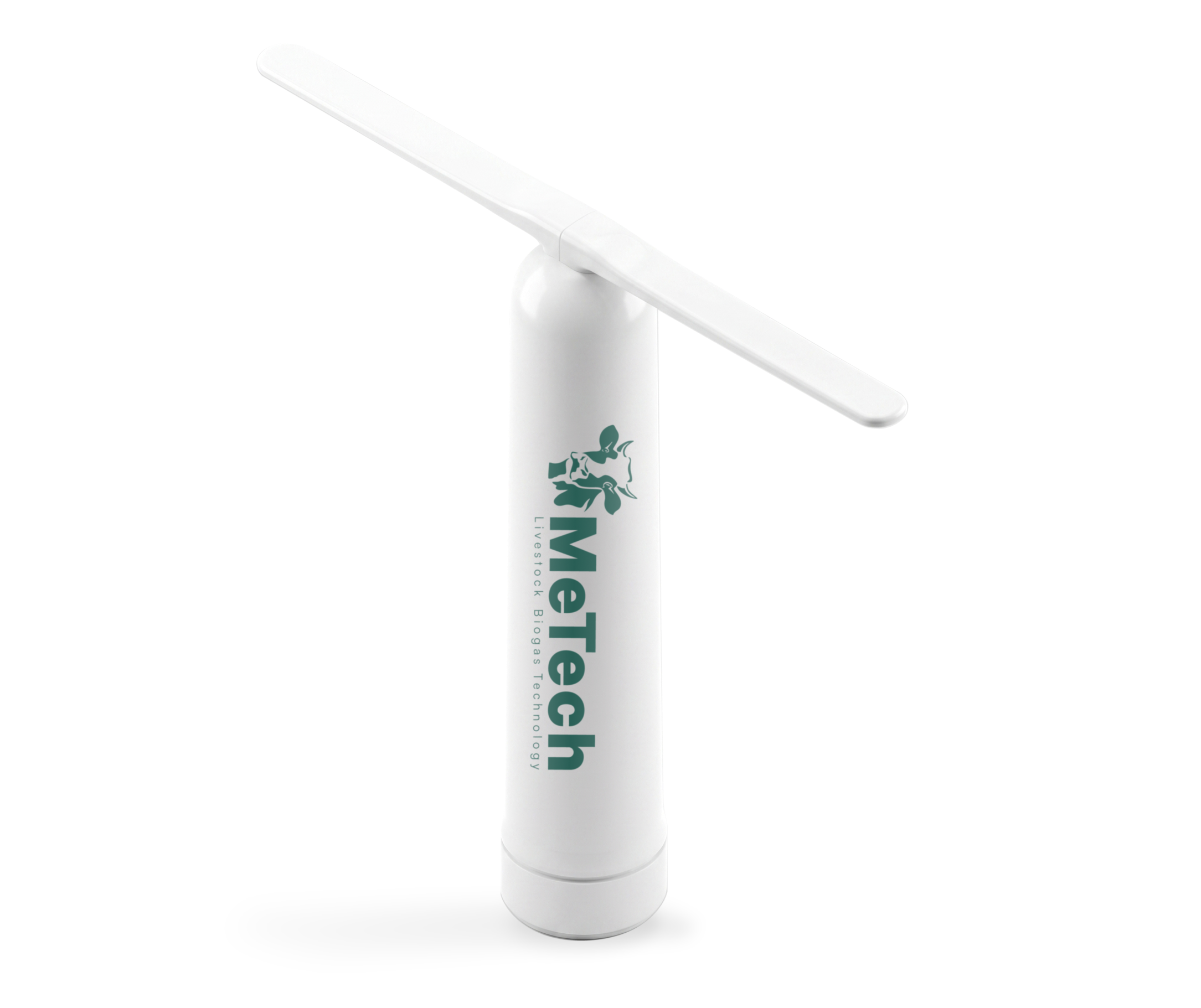
Methane Monitor Capsule
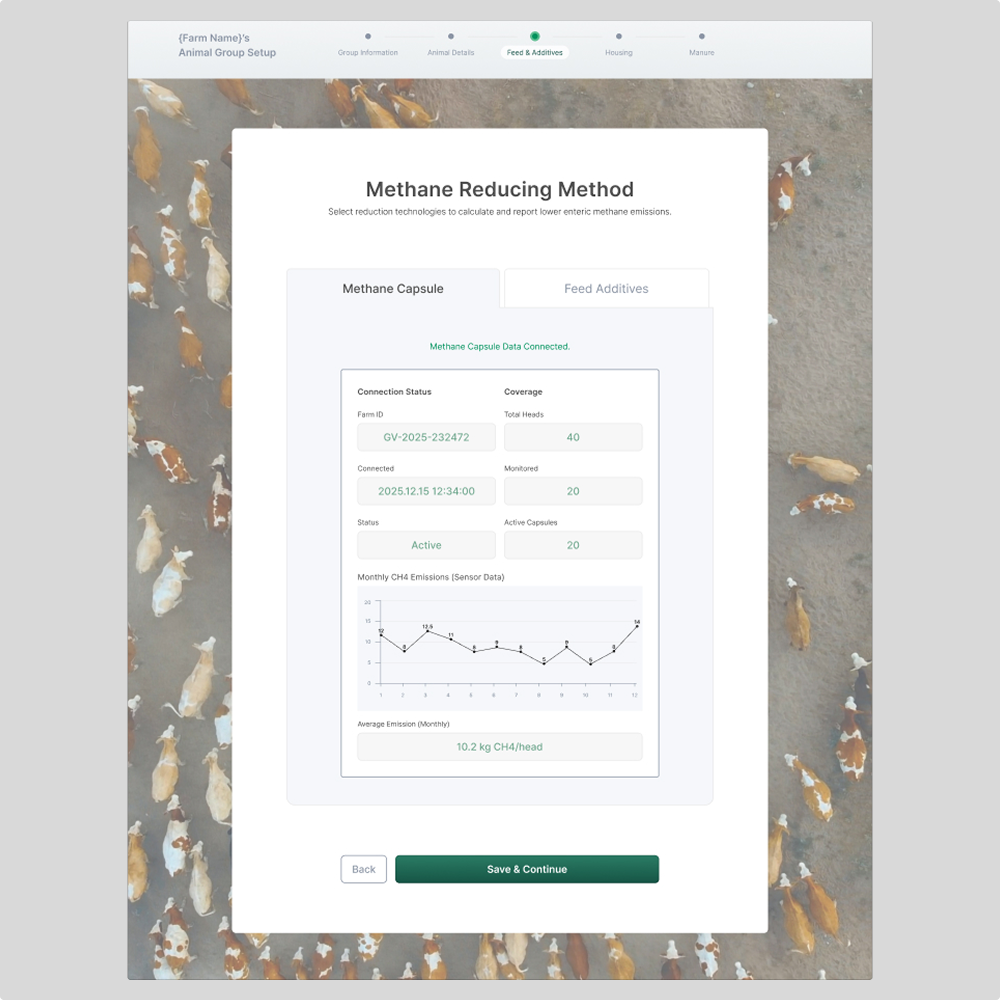
Measures methane concentration inside the rumen in real time, providing the foundational data needed for low-carbon certification and building an MRV system.
- Methane measurement range 0-150,000ppm
- Continuous data collection 24/365
Proving reduction outcomes for programs such as low-carbon certification and carbon credit projects requires accurate measurement data. Yet the livestock industry still relies on estimation methods that use averages and assumed values to determine methane emissions.
The MeTech Methane Monitor Capsule continuously measures concentration in the rumen where methane is produced, confirming actual output and precisely capturing how feed additives and improved husbandry conditions affect emissions.
Measured at the Source
By measuring directly in the rumen where methane is generated, it eliminates the 20-30% error found in conventional measurement methods.
Continuous Measurement
Unlike feed-station, optical-analyzer, and respiratory-mounted approaches, it collects data through 24-hour continuous measurement.
Clinical Validation
Accuracy is being refined through a one-year clinical trial at Seoul National University and field testing on commercial farms in Korea.
How It Works

Capsule Administration
Given orally to settle in the rumen. Unlike wearables, it requires no maintenance or inspection.

Methane Concentration Measurement
Measures CH₄ concentration directly inside the rumen, removing atmospheric dilution error.

Data Transmission
Transmits data via LoRa through the farm gateway over a range of up to 1km.

Emissions Analysis
Analyzes continuous data to aggregate emissions at the animal and farm level.

Report Delivery
Review results on the platform and extract data for inventory, research, and credit verification.
Difference from Conventional Methods
| Method | Methane Monitor Capsule |
|---|---|
| Deployment Cost | Low |
| Measurement Location | Inside the rumen |
| Measurement Frequency | Continuous (100+ times/day) |
| Data Characteristics | Tracks methane concentration changes per animal |
| Primary Use | Low-carbon certification, MRV, reduction verification |
| Chamber | Feed Station |
|---|---|
| High | High |
| Emitted gas inside an isolation facility | Breath and burp gas during feeding |
| Continuous during isolation | At feeding (2-4 times/day) |
| Total emissions during isolation | Estimated from short-term measurement |
| Research and reference measurement | Research and on-farm validation |
| Optical Analyzer | Wearable Sensor |
|---|---|
| High | Low |
| Instantaneous breath and burp gas | Neck/ear mounted |
| Limited to measurement moments | Continuous (battery-limited) |
| For on-site comparison reference | Estimated from measured values |
| Research and field comparison | Supplementary health and behavior monitoring |
| Method | Methane Monitor Capsule | Chamber |
|---|---|---|
| Deployment Cost | Low | High |
| Measurement Location | Inside the rumen | Emitted gas inside an isolation facility |
| Measurement Frequency | Continuous (100+ times/day) | Continuous during isolation |
| Data Characteristics | Tracks methane concentration changes per animal | Total emissions during isolation |
| Primary Use | Low-carbon certification, MRV, reduction verification | Research and reference measurement |
| Feed Station | Optical Analyzer | Wearable Sensor |
|---|---|---|
| High | High | Low |
| Breath and burp gas during feeding | Instantaneous breath and burp gas | Neck/ear mounted |
| At feeding (2-4 times/day) | Limited to measurement moments | Continuous (battery-limited) |
| Estimated from short-term measurement | For on-site comparison reference | Estimated from measured values |
| Research and on-farm validation | Research and field comparison | Supplementary health and behavior monitoring |
| Method | Methane Monitor Capsule | Chamber | Feed Station | Optical Analyzer | Wearable Sensor |
|---|---|---|---|---|---|
| Deployment Cost | Low | High | High | High | Low |
| Measurement Location | Inside the rumen | Emitted gas inside an isolation facility | Breath and burp gas during feeding | Instantaneous breath and burp gas | Neck/ear mounted |
| Measurement Frequency | Continuous (100+ times/day) | Continuous during isolation | At feeding (2-4 times/day) | Limited to measurement moments | Continuous (battery-limited) |
| Data Characteristics | Tracks methane concentration changes per animal | Total emissions during isolation | Estimated from short-term measurement | For on-site comparison reference | Estimated from measured values |
| Primary Use | Low-carbon certification, MRV, reduction verification | Research and reference measurement | Research and on-farm validation | Research and field comparison | Supplementary health and behavior monitoring |
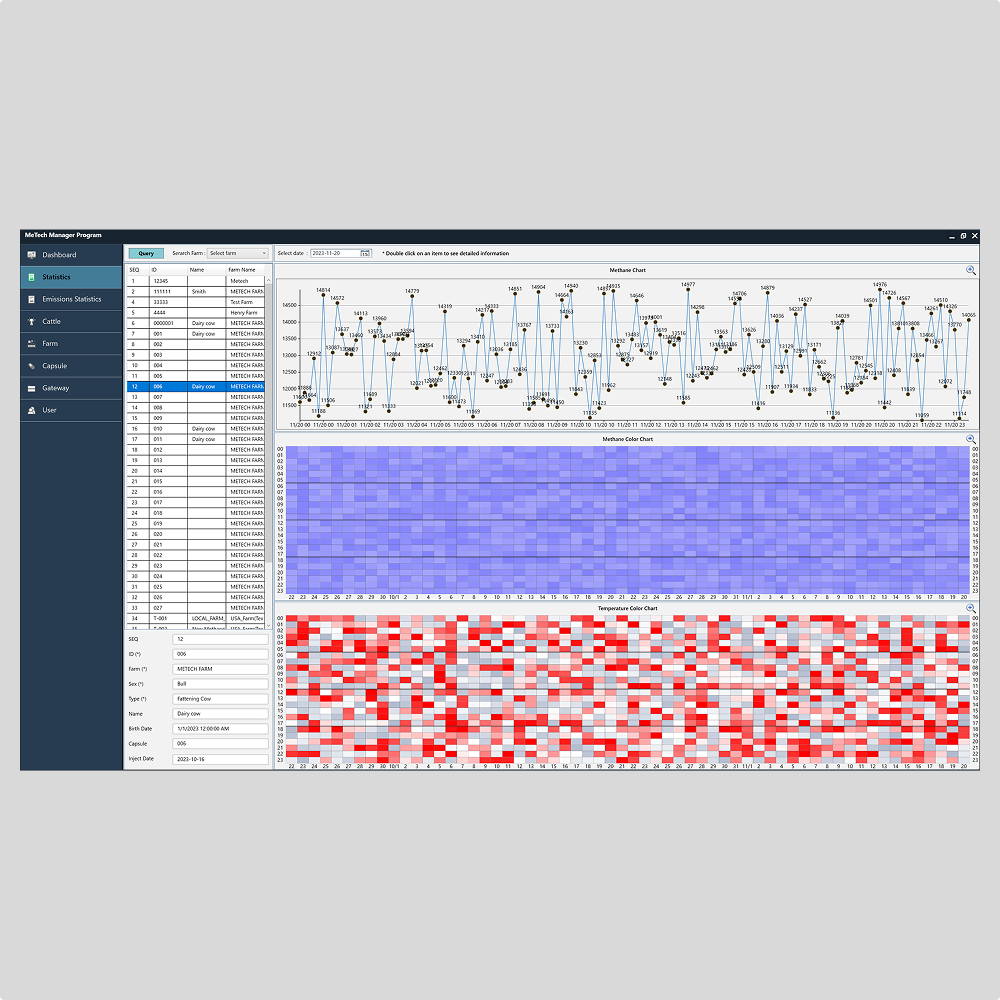
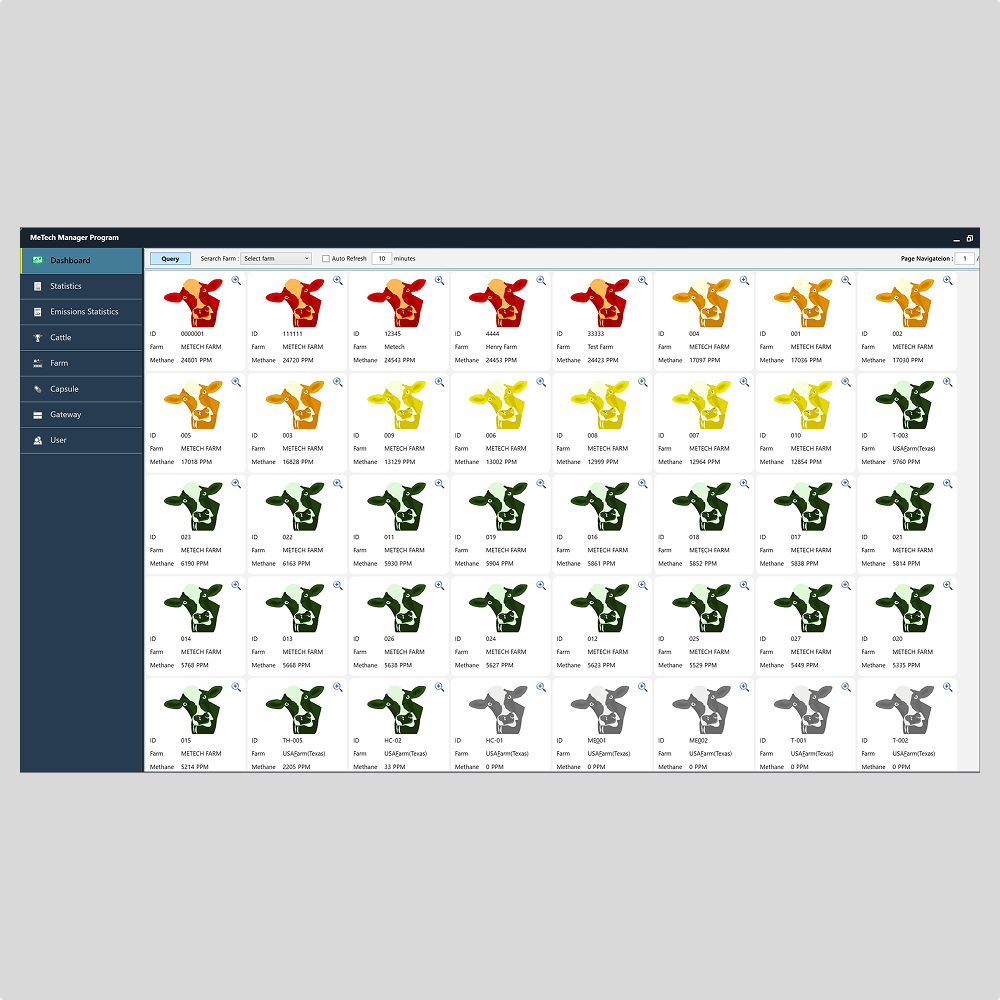
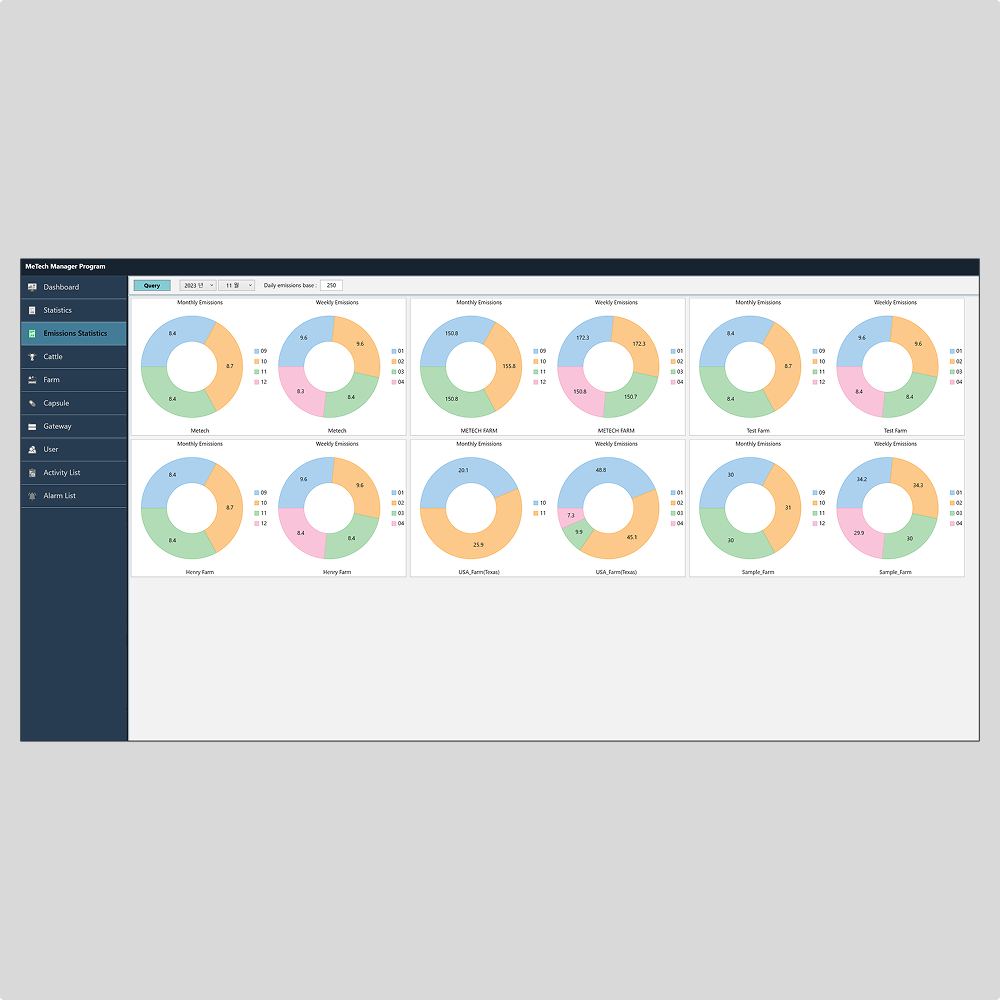
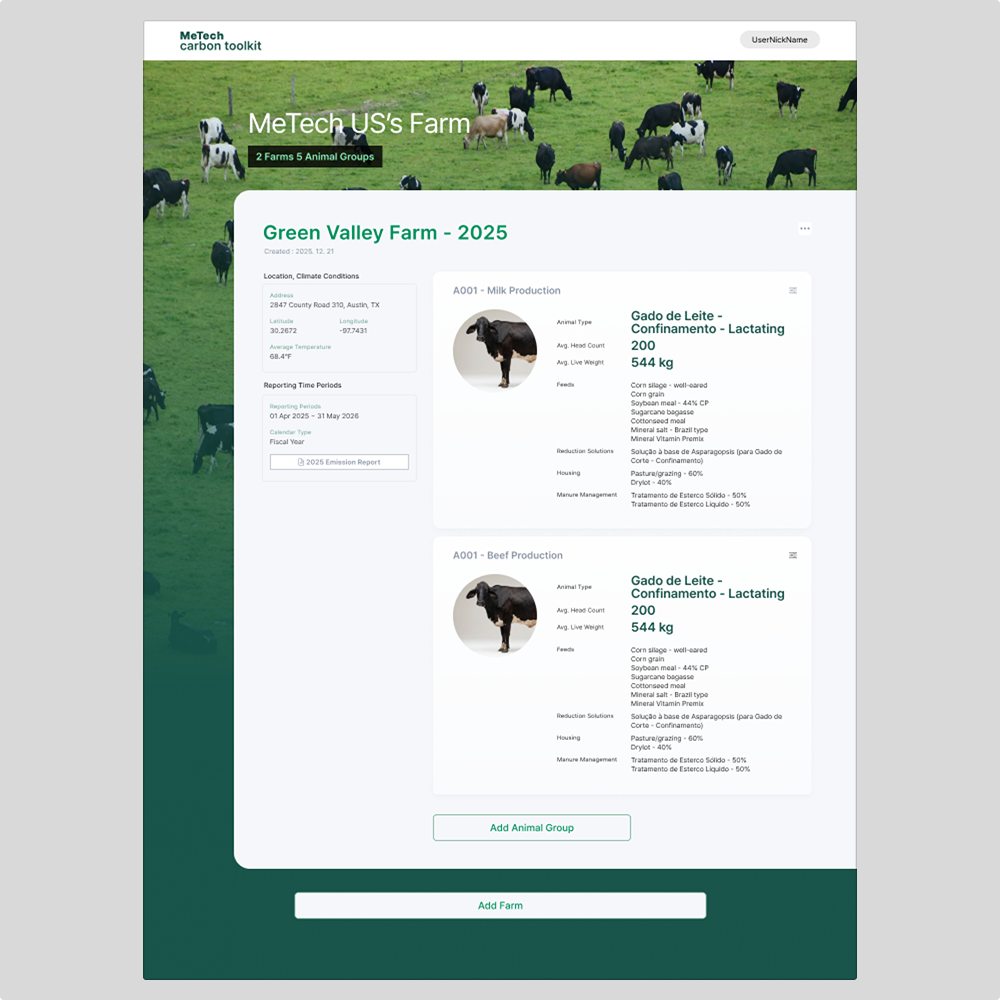
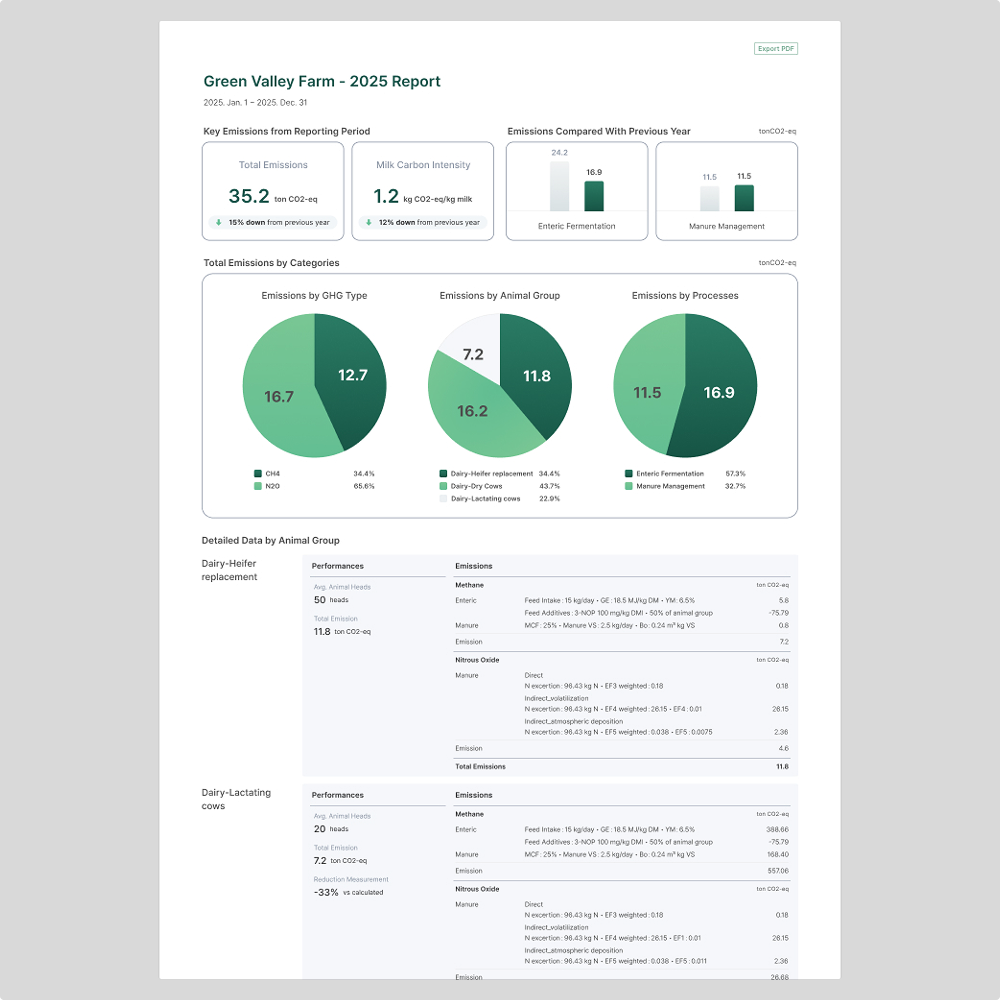
Platform
Review Methane Monitor Capsule data and reports.
Carbon Toolkit
Review farm- and livestock-group-level emissions for MRV compliance. (Methane monitoring integration coming soon)
Methane Monitoring
Track the methane status of animals and farms with the Methane Monitor Capsule in real time.
Applications
Put methane emissions data to work wherever you need it.
Baseline Establishment
Build GHG baselines from actual measurements rather than breed- and feed-based estimates
Feed Impact Research
Directly measure how feed, breed, and genetics affect methane emissions
Feed Additive & Inhibitor Efficacy
Measure the actual methane-reduction effect of feed additives and inhibitors
Carbon Credit Projects
Provide the continuous, traceable measurement layer that credit methodologies require
Scope 3 Reporting
Provide verifiable upstream data to processed-food companies
Specifications
Methane Monitor Capsule
| Key Function | Methane gas (CH₄) emissions measurement |
| Material | Bioplastic |
| CH₄ Measurement Range | 0-150,000 ppm |
| Dimensions | 38 × 110 mm / 100g |
| Capsule Service Life | Up to 1.5 years |
| Communication | LoRa (868-928 MHz) |
| Other | Waterproof IP68 |
Gateway
| Power | DC 12V / battery (optional) |
| Channels | Dual LoRa Concentrators, up to 16 ch |
| Antenna | Internal Wi-Fi/GPS/LTE, external LoRa |
| Coverage | 1km radius (varies with terrain and obstacles) |
The BioCapsule, Methane Monitor Capsule, and Methane Reducer Capsule can share a gateway.
FAQ
Methane is a key greenhouse gas in the livestock industry, and accurate measurement is the starting point for low-carbon livestock, low-carbon feed verification, ESG, and building an MRV system.
The Methane Monitor Capsule continuously measures methane data per animal, providing foundational data across a range of fields
Most existing equipment measures from the breath a cow exhales (burps), but the Methane Monitor Capsule measures directly inside the rumen where methane is produced.
It is barely affected by external conditions, continuously collects data per animal, and enables long-term pattern analysis.
The rumen is where methane is produced, and most of it is released through burping.
Through additional research, we plan to cross-check the Methane Monitor Capsule’s continuous data against standard emissions verification methods to improve precision.
It is used in fields that require detailed data, such as low-carbon livestock certification, low-carbon feed efficacy verification, methane-reduction technology assessment, R&D, ESG reporting, and carbon credit projects.
It continuously collects measurement data more than 100 times a day. This enables more accurate analysis of methane emission patterns than conventional methods that measure only at specific moments.
In-rumen measurement data is stored on a cloud server via LoRa communication through a gateway installed on the farm. Methane data can be reviewed through the platform and the carbon toolkit.
The Methane Monitor Capsule can be used together with existing solutions such as methane-reducing feed additives, and we are developing it for use in low-carbon certification and carbon credit projects that quantitatively verify reduction outcomes.
Based on methane measurement data, we are building an MRV system that meets international standards, with the goal of developing it into a data platform usable for low-carbon certification and carbon credit projects.
It is not just a sensor but an integrated data platform spanning direct in-rumen measurement, AI analysis, and future connections to methane reduction and carbon credits.
What sets it apart is that it links health management, methane measurement, reduction, and carbon credits into a single ecosystem.